Pages

Thursday, May 7, 2015

A Great Teacher's Influence

"The influence of a great teacher can never be erased."

Friday, May 1, 2015

Classroom's Physical Design

"Improving a primary classroom's physical design, including lighting, layout, and decorations, can boost learning by as much as 16%" - Barett et al.

Friday, December 12, 2014

The Seven Types of Intelligence


Linguistic, logical-mathematical, bodily-kinetic, spatial, musical, interpersonal, and intrapersonal

Thursday, November 20, 2014

I Teach

"I facilitate thinking.  I engage minds.  I listen to questions.  I encourage risk.  I support struggle.  I cultivate dreams.  I learn every day.  I teach."


Wednesday, October 15, 2014

Involve

"Tell me and I forget.  Teach me and I may remember.  Involve me and I learn." - Benjamin Franklin

Sunday, September 14, 2014

Thursday, August 14, 2014

Tips on Pronunciation

Listening is key to pronunciation

Thursday, July 31, 2014

Irregular Verbs

A song to help students remember irregular verbs

Wednesday, July 16, 2014

Let’s stop trying to teach students critical thinking

http://theconversation.com/lets-stop-trying-to-teach-students-critical-thinking-30321
Professor of Education at University of Derby 

Socrates, the father of critical thinking. lentina_x, CC BY-NC-SA

Many teachers say they strive to teach their students to be critical thinkers. They even pride themselves on it; after all, who wants children to just take in knowledge passively?
But there is a problem with this widespread belief. The truth is that you can’t teach people to be critical unless you are critical yourself. This involves more than asking young people to “look critically” at something, as if criticism was a mechanical task.
As a teacher, you have to have a critical spirit. This does not mean moaning endlessly about education policies you dislike or telling students what they should think. It means first and foremost that you are capable of engaging in deep conversation. This means debate and discussion based on considerable knowledge – something that is almost entirely absent in the educational world. It also has to take place in public, with parents and others who are not teachers, not just in the classroom or staffroom.
The need for teachers to engage in this kind of deep conversation has been forgotten, because they think that being critical is a skill. But the Australian philosopher John Passmore criticised this idea nearly half a century ago:
If being critical consisted simply in the application of a skill then it could in principle be taught by teachers who never engaged in it except as a game or defensive device, somewhat as a crack rifle shot who happened to be a pacifist might nevertheless be able to teach rifle-shooting to soldiers. But in fact being critical can be taught only by men who can themselves freely partake in critical discussion.

The misuses of ‘criticism’

The misuse of the idea of “criticism” first became clear to me when I gave a talk about critical thinking to a large group of first-year students. One student said that the lecturers she most disliked were the ones who banged on about the importance of being critical. She longed for one of them to assert or say something, so she could learn from them and perhaps challenge what they say.
The idea that critical thinking is a skill is the first of three popular, but false views that all do disservice to the idea of being critical. They also allow many teachers to believe they are critical thinkers when they are the opposite:
  1. “Critical thinking” is a skill. No it is not. At best this view reduces criticism to second-rate or elementary instruction in informal and some formal logic. It is usually second-rate logic and poor philosophy offered in bite-sized nuggets. Seen as a skill, critical thinking can also mean subjection to the conformism of an ideological yoke. If a feminist or Marxist teacher demands a certain perspective be adopted this may seem like it is “criticism” or acquiring a “critical perspective”, but it is actually a training in feminism or Marxism which could be done through tick box techniques. It almost acquires the character of a mental drill.
  2. “Critical thinking” means indoctrination. When teachers talk about the need to be “critical” they often mean instead that students must “conform”. It is often actually teaching students to be “critical” of their unacceptable ideas and adopt the right ones. Having to support multiculturalism and diversity are the most common of the “correct ideas” that everyone has to adopt. Professional programmes in education, nursing, social work and others often promote this sort of “criticism”. It used to be called “indoctrination”.
  3. “Critical theories” are “uncritical theories”. When some theory has the prefix “critical” it requires the uncritical acceptance of a certain political perspective. Critical theory, critical race theory, critical race philosophy, critical realism, critical reflective practice all explicitly have political aims.

What is criticism?

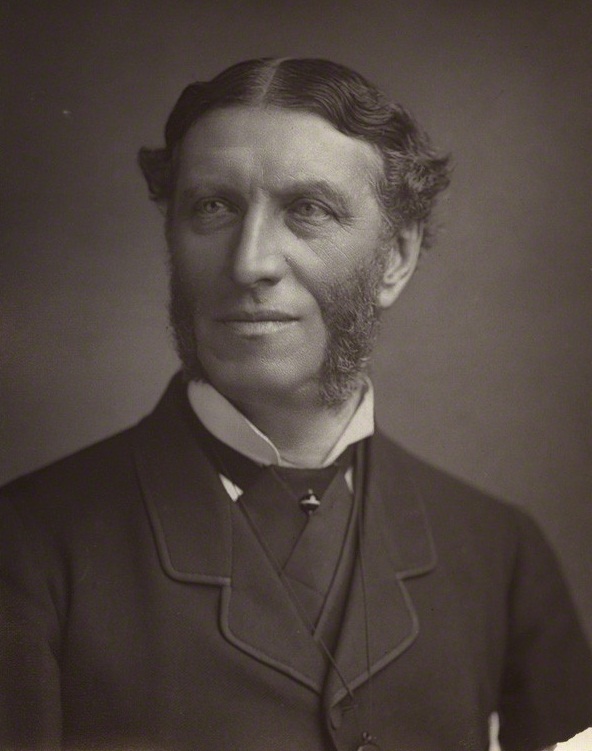
Criticism, according to Victorian cultural critic Matthew Arnold, is a disinterested endeavour to learn and propagate the best that is known and thought in the world. We should all be as “bound” by that definition as he was. We need only to teach the best that is known and thought and “criticism” will take care of itself. That is a lesson from 100 years ago that every teacher should learn.

Matthew Arnold knew how to be critical. Elliott & Fry, via Wikimedia Commons

Critical thinking seen as Arnold defined it is more like a character trait – like having “a critical spirit”, or a willingness to engage in the “give and take of critical discussion”. Criticism is always about the world and not about you.
The philosopher most associated with the critical spirit is Socrates. In the 1930s, another Australian philosopher John Anderson put the Socratic view of education most clearly when he wrote: “The Socratic education begins … with the awakening of the mind to the need for criticism, to the uncertainty of the principles by which it supposed itself to be guided.”
But when I discuss Socratic criticism with teachers and teacher trainers I miss out Anderson’s mention of the word “uncertainty”. This is because many teachers will assume that this “uncertainty” means questioning those bad ideas you have and conforming to an agreed version of events, or an agreed theory.
Becoming a truly critical thinker is more difficult today because so many people want to be a Socrates. But Socrates only sought knowledge and to be a Socrates today means putting knowledge first.

Monday, June 30, 2014

Nouns and Verbs

Pronunciation is different for a word that can act both as a noun and a verb.


1. The farm was used to produce produce.

2. We must polish the Polish furniture.

3. He could lead if he would get the lead out.

4. The soldier decided to desert his dessert in the desert.

5. Since there is no time like the present, he thought it was time to present the present.

6. A bass was painted on the head of the bass drum.

7. When shot at, the dove dove into the bushes.

8. I did not object to the object.

9. I had to subject the subject to a series of tests.

10. The insurance was invalid for the invalid.

11. There was a row among the oarsmen about how to row.

12. The buck does funny things when the does are present.

13. A seamstress and a sewer fell down into a sewer line.

14. To help with planting, the farmer taught his sow to sow.

15. The wind was too strong to wind the sail.

16. Upon seeing the tear in the painting I shed a tear.

Thursday, May 29, 2014

If You Want to Build a Ship

"If you want to build a ship, don't drum up people to collect wood and don't assign them tasks and work, but rather teach them to long for the endless immensity of the sea."

- Antoine de Saint Exupéry

Monday, May 5, 2014

Teacher and Students

What about college professors?


"The average teacher affects over 3,000 students in their career."

Tuesday, March 26, 2013

Teaching


"Teaching is the one profession that creates all other professions."

Saturday, March 16, 2013

10 Great Classroom Icebreakers

These are excellent classroom icebreaker tips from: http://www.worksheetlibrary.com/teachingtips/icebreakers.html


"1. Self-Portrait.
Have your students draw themselves. After they have done this, collect the papers and hang them up for the whole class to see. Now have students try to guess who the artists was for each picture.

2. Letter Writing.
At the beginning of the year, write a short letter about yourself as the teacher. Tell the students where you live, what your hobbies are, and if you have any children, pets, etc. Hand out your letter to each student in your class and ask them to write you back with similar information about themselves.

3. The Mingle Game.
Give each student an index card. Have them write a question that they would like to ask the other students in the class. Examples might include, "What is your favorite song?" or "What is your favorite sport?" Next, have the students get up and walk around the room. When you say, "stop," students have to stand beside the person closest to them and ask the question that is on their own card. Both students have to answer the questions. Now have them mingle again and meet a new person.

4. The "What Am I?" Game.
Have the students get into a circle. Give each student a post-it note. Have each person write a noun on the post-it note. Then stick the post-it on the forehead of the person standing to right of them with the noun showing. Now have student take a turn to ask the group a "yes/no" question that will help them guess the noun on their forehead. If they do not guess correctly, the person on their right gets to ask a question. Keep going until all of the noun have been guessed, or your time limit has expired.

5. These are a few of my favorite things.
Pass around a sheet of paper and some pens. Ask the students to write their name and their favorite TV shows (you can come up with your own topic for favorite things). Collect the papers and pens. Begin reading the answers, but have the class guess who wrote the response.

6. Birthday Lineup.
Call out any month of the year and have all students born in that month come up to the front of the room. It is up to the students to decide who stands first, second, etc., so they are standing from the first day of the month to the last day of the month. Now call out another month (don't call the months in order), and have those students try to position themselves correctly by day and by where they should stand as an entire month. This is a great way to get kids working together and knowing each other. Once all of the kids have lined up, test them to see if they are correct.

7. Icebreaker Pictionary.
Have the students draw pictures about what they like to do, what their favorite foods are, and what is their favorite subject in school. Have each student come up and show their pictures to the class. See if the students can guess what each student drew that tells a little bit about themselves. For instance, if a student draws a yellow M, can anyone guess that she likes McDonalds?

8. Show and Tell.
Don't forget about this old time favorite part of class. Instruct students to bring in something that they cherish, or just want to share with the class. Give each student a turn to come up and tell about the item that they brought in. This way the class will get to know each other and something that makes each student happy.

9. The Snowball Activity.
Have students write three things about themselves on a piece of paper. Then have them crumble up the paper to resemble a snowball. Let the students have a snowball fight for about one minute. Now everyone grabs one of the snowballs and has to try and find the person who wrote on it. Once they find their partner, they have to bring that person up in front of the class and explain what they learned about their new friend with the three facts written on the piece of paper.

10. The Observation Game.
Line up the students in two lines facing each other. If there is an odd number of students, you can play the game, too. Give students 30 seconds to look each other over really good, paying attention to all details about their partner. The students in one line now turn facing the other way while the other line of students changes something about themselves. For example, a girl might take off a hair bow, or a boy might un-tuck his shirt. When the kids in the first line turn back around, they have to guess what their partner changed. Now switch and let the first line make the change and the second line guess the difference."

Tuesday, February 12, 2013

7 Types of Intelligence

Source: Internet

Thursday, December 27, 2012

Why Students "Have No Time to Study"

Number of days in a year = 365 

Sundays = 52 days
Sundays are meant for resting
Days left = 313

Summer vacation = 60 days
Weather is too hot, and it's a vacation
Days left = 253

8 hours of daily sleep = 122 Days
Sleep is necessary
Days left = 131

1 hour daily for play = 15 Days
It's good for one's health
Days left = 116

2 hours daily for food = 30 Days
Take the time to chew properly
Days left = 86

Examination days in a year = 30 Days
Assessments are necessary
Days left = 56

Winter break = 25 Days
Weather is cold, difficult to study
Days left = 31

Other holidays = 20 Days
These holidays are for everyone to enjoy
Days left = 11

Sickness at least once a year = 8 Days
Because of illness, studying is difficult
Days left = 3

Exam results days = 3 Days
Getting results is necessary
Days left = 0 

Thursday, December 13, 2012

Sunday, December 9, 2012

Saturday, December 1, 2012